What Are China Top Hard Chrome Plating Suppliers?

China’s hard chrome plating sector supports hydraulic cylinders, mining equipment, molds, and precision shafts. Its value is practical: a correctly plated rod can resist wear, reduce friction, and extend service intervals. However, supplier quality varies sharply between factories, even when websites use similar claims.

Grand View Research’s metal finishing market analysis identifies industrial durability and corrosion protection as major demand drivers. Research and Markets’ hard chrome plating coverage also highlights applications across automotive, aerospace, machinery, and hydraulic systems. These reports indicate steady industrial demand, but they do not create a reliable ranking of Chinese suppliers. That limitation matters.

The real comparison begins with process control. A qualified supplier should explain coating thickness, hardness, surface roughness, grinding allowance, and hydrogen-relief procedures. Ask for measurable evidence. ISO 9001 certification supports quality management, while ISO 14001 can indicate stronger environmental controls. ASTM B650 and related engineering specifications may help buyers define technical requirements, although the correct standard depends on the component and application.

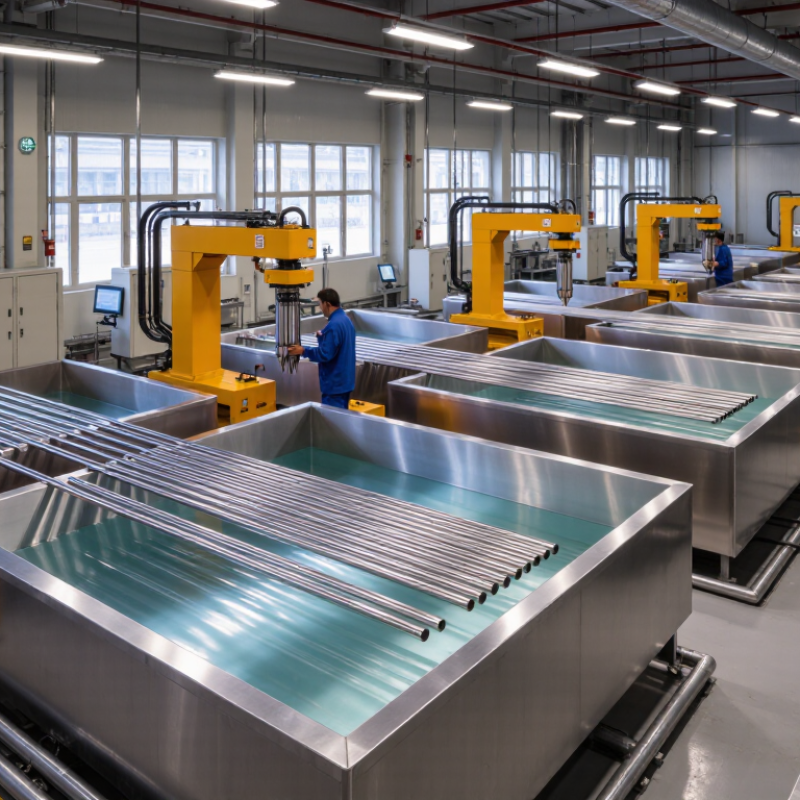
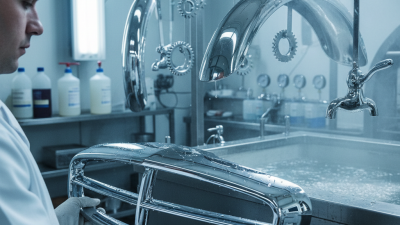
Look closely at the workshop. Are plating tanks clean and documented? Are test panels retained? Can the supplier provide thickness maps, adhesion results, and batch traceability? These details often reveal more than polished marketing language. Some suppliers specialize in hydraulic rods; others perform decorative or repair plating. They are not interchangeable.

This guide examines China’s top hard chrome plating suppliers through capability, inspection discipline, export experience, customization, and total cost. “Top” remains subjective. A supplier with impressive equipment may still fail on communication or delivery consistency. Buyers should verify current certificates, sample results, and references before making a final decision.

What Are China Top Hard Chrome Plating Suppliers?

What Is Hard Chrome Plating and Why Is It Used in China?

Hard chrome plating is an engineering coating, not a decorative finish. Chromium is electroplated onto steel, cast iron, or selected alloys. The layer can resist abrasion, corrosion, friction, and repeated sliding contact. Typical hardness reaches about 800–1,000 HV, while coating thickness may range from 20 to over 500 micrometres.

Its value is practical. A worn hydraulic rod, mould surface, or forming tool can often be rebuilt through grinding and plating. That may reduce replacement time and material waste. The 2024 UNIDO Industrial Statistics Yearbook shows China producing roughly one-third of global manufacturing value added. This manufacturing scale supports dense supply chains for cylinders, tooling, mining parts, and precision shafts. Market studies also estimate the global metal-finishing industry above 100 billion US dollars, although definitions differ between reports.

When comparing China’s top hard chrome plating suppliers, buyers should check more than price. Ask for hardness records, thickness maps, adhesion-test results, surface roughness data, and salt-spray or wear-test methods. ISO 6158 provides a useful reference for engineering chromium coatings. A capable supplier should explain bath control, masking, post-grinding, and wastewater management clearly. Small details matter.

The weak point is often inspection. A bright surface can hide poor adhesion or uneven thickness. One supplier may also quote “hard chrome” without defining its process. That deserves caution. Trial parts, independent testing, and traceable inspection records provide stronger evidence than polished catalog claims.

What Standards Define a Reliable Hard Chrome Plating Supplier?

A reliable hard chrome plating supplier is defined by measurable controls, not attractive claims. ISO 6158 and ASTM B650 provide useful references for engineering chromium coatings, including thickness, adhesion, and surface condition. Ask for coating maps, hardness results, roughness readings, and corrective-action records from comparable shafts or cylinders. Numbers should trace back to instruments, operators, and batch dates.

Records matter. Not paperwork.

Independent laboratory verification strengthens credibility when wear life or corrosion resistance affects safety-critical equipment. ASTM test methods should match the part’s load, lubrication, temperature, and substrate; a generic hardness certificate proves little. A supplier should also show calibration evidence under ISO/IEC 17025 principles, even when testing occurs in-house. That distinction is often missed.

Environmental and worker controls deserve equal scrutiny. OSHA’s Hexavalent Chromium Standard sets an eight-hour permissible exposure limit of 5 micrograms per cubic meter. EPA compliance records, ventilation testing, wastewater data, and documented training reveal operational maturity. ISO 9001 certification can support consistency, but certification alone cannot guarantee plating performance. That is the uncomfortable part. I would request a recent failed-batch investigation. A supplier willing to disclose weaknesses may be more reliable than one offering perfect brochures.

Which Regions and Companies Lead China’s Hard Chrome Plating Industry?

China’s hard chrome plating suppliers are concentrated in three manufacturing belts. The Yangtze River Delta leads precision work for hydraulic rods, molds, and automation parts. The Pearl River Delta serves machinery, electronics, and export-oriented factories. The Bohai Rim remains strong in steel equipment, mining components, and heavy engineering. The map is uneven.

Industry studies published by Grand View Research and Fortune Business Insights generally place Asia-Pacific above half of global electroplating demand. China’s scale is supported by its manufacturing base. World Steel Association data recorded about 1.02 billion tonnes of Chinese crude steel output in 2023. That volume creates continuous demand for wear-resistant cylinders, rolls, shafts, and forming tools.

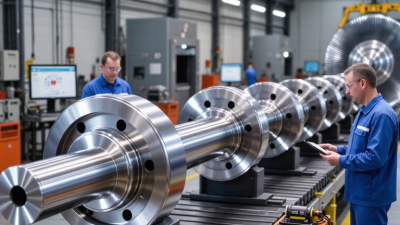
The strongest suppliers are usually specialized regional processors, not broad chemical distributors. Leading workshops combine controlled bath chemistry, automated rectifiers, precision grinding, and dimensional inspection. Many can deliver coatings from roughly 20 to 500 microns, depending on the part and service conditions. Buyers should request hardness readings, thickness maps, adhesion results, and repair records. ISO 6158 provides a useful reference for electrodeposited chromium coatings. Still, public rankings remain limited, and supplier claims can be difficult to compare. Quality varies. A factory visit may reveal more than a polished certificate. Surface preparation, masking accuracy, and post-plating grinding often decide whether the coating survives real production.

What Are China Top Hard Chrome Plating Suppliers? – Which Regions and Companies Lead China’s Hard Chrome Plating Industry?
Leading Industrial Region Representative Manufacturing Areas Industrial Demand Drivers Common Hard Chrome Plating Services Typical Component Applications Supplier Strengths Important Qualification Factors Regional Industry Relevance
Guangdong Dongguan, Shenzhen, Foshan, Guangzhou Electronics manufacturing, mold making, automation equipment, packaging machinery, and precision manufacturing Repair plating Precision plating OD plating ID plating Hydraulic rods, molds, guide posts, shafts, rolls, tooling, and machine parts Strong access to precision machining, tooling, surface finishing, and export-oriented manufacturing supply chains Dimensional tolerance, surface roughness, masking control, inspection records, and wastewater compliance Very high
Jiangsu Suzhou, Wuxi, Changzhou, Nantong, Nanjing Automotive equipment, industrial machinery, hydraulic systems, steel processing, and advanced manufacturing Industrial hard chrome Build-up plating Grinding Polishing Hydraulic cylinders, piston rods, rollers, dies, shafts, extrusion components, and wear-resistant parts Broad industrial customer base and strong integration with machining, heat treatment, grinding, and engineering services Plating thickness uniformity, adhesion, hardness testing, concentricity, and post-plating grinding capability Very high
Zhejiang Ningbo, Hangzhou, Jiaxing, Taizhou, Wenzhou Automotive components, injection molding, pumps and valves, machinery, hardware, and export manufacturing Decorative-free hard chrome Mold plating Low-friction plating Refurbishment Molds, valve stems, pump parts, rollers, fast-wearing tooling, and mechanical transmission components Good combination of component manufacturing, mold production, machining, and overseas supply-chain experience Part size limits, edge coverage, crack control, corrosion protection requirements, and traceability High
Shandong Qingdao, Yantai, Jinan, Weifang, Zibo Heavy machinery, agricultural equipment, mining equipment, marine equipment, and petrochemical industries Large-part plating Roll plating Repair plating Wear restoration Large hydraulic rods, industrial rolls, pump shafts, cylinders, agricultural machinery parts, and heavy equipment components Experience with larger industrial components and repair-oriented surface engineering projects Maximum workpiece dimensions, lifting capacity, pre-plating repair, dimensional restoration, and environmental permits High
Shanghai and Yangtze River Delta Shanghai, Kunshan, Suzhou, Jiaxing, Ningbo Automotive, semiconductor equipment, precision machinery, medical equipment, and international manufacturing Precision hard chrome Small-batch work Engineering support Inspection services Precision shafts, tooling, automation components, semiconductor equipment parts, and high-tolerance machine elements Strong engineering resources, quality-system awareness, laboratory access, and international customer support ISO 9001 systems, measurement capability, coating microhardness, roughness, thickness mapping, and documentation Very high
Hebei and Tianjin Tianjin, Tangshan, Langfang, Shijiazhuang Steel production, oil and gas equipment, construction machinery, transportation equipment, and heavy industry Large-diameter plating Industrial rolls Restoration plating Wear protection Steel mill rolls, hydraulic components, large shafts, heavy machinery parts, and industrial tooling Proximity to steel, heavy equipment, and repair markets; suitable for industrial-scale components Large-part handling, coating stress, bath capacity, grinding accuracy, site environmental controls, and delivery schedule High
Liaoning and Northeast China Shenyang, Dalian, Anshan, Changchun Machine tools, shipbuilding, rail equipment, steel, aerospace-related manufacturing, and heavy engineering Heavy-duty plating Roll refurbishment Shaft repair Industrial coating Machine-tool components, ship shafts, rolls, hydraulic parts, guideways, and heavy industrial components Established heavy-industry base and experience with repair, refurbishment, and large mechanical components Substrate condition, pretreatment, coating adhesion, fatigue performance, balancing, and post-plating machining Moderate to high
Industry note: Regional relevance is based on the concentration of manufacturing demand, metalworking capacity, surface-treatment activity, and supporting industrial supply chains. Supplier qualification should be confirmed through current technical data, facility audits, sample testing, environmental documentation, and application-specific performance requirements.

How Should Buyers Compare China’s Hard Chrome Plating Suppliers?

China’s top hard chrome plating suppliers should be compared by process control, not catalogue price. Grand View Research’s 2024 metal finishing analysis forecasts roughly 5% annual market growth through 2030. That expansion increases supplier choice, but also increases quality variation. Experienced buyers should request coating thickness maps, microhardness results, surface roughness data, and adhesion test records from recent batches.

A practical comparison starts with samples. Inspect a cross-section, not only a polished photograph. Check thickness at edges, bores, and high-wear zones. Ask whether the supplier controls bath temperature, current density, filtration, and cleaning time. ISO 6158 provides useful guidance for electrodeposited chromium coatings. ASTM B177 also supports standardised testing practices. I would request at least three sample reports. One report can hide a process problem.

Cost matters, but reject rates matter more. Compare quoted thickness, machining allowance, packaging, lead time, and warranty terms line by line. The supplier should provide batch traceability and clear wastewater-management documentation. China’s environmental rules have tightened significantly, so responsible facilities should explain their control systems without vague promises. Certificates help. They are not proof by themselves.

A site audit remains valuable. Watch how operators measure parts. Check whether instruments have current calibration records. Ask for corrective-action data, not just perfect results. Some suppliers may resist sharing failure rates. That hesitation deserves attention. A realistic supplier admits occasional variation and explains how it is contained. This is less impressive than flawless marketing, but more reliable for long-term purchasing.

What Questions Should Be Asked Before Selecting a Supplier?

Selecting a hard chrome plating supplier should begin with precise questions, not a low quotation. Can the supplier meet your required thickness, hardness, surface roughness, and dimensional tolerance? Ask for recent test reports, cross-section measurements, and adhesion results. ASTM B650 provides guidance for electrodeposited hard chromium coatings, but a certificate alone does not prove consistent production quality.

What is the supplier’s rejection rate, and how is it calculated? ISO’s 2023 Survey reported more than one million ISO 9001 certificates worldwide, yet certification does not replace process evidence. Request batch traceability, calibration records, corrective-action reports, and inspection samples from similar components. Ask how they control grinding after plating, since excessive grinding can expose the substrate or create uneven geometry. Small details matter.

Worker and environmental controls also deserve direct questions. Under OSHA’s hexavalent chromium standard, the permissible exposure limit is 5 micrograms per cubic meter over an eight-hour shift. Ask whether the facility monitors airborne exposure, treats wastewater, and maintains documented chemical controls. Reliable suppliers should answer clearly, without hiding behind general statements. I would also verify production capacity, lead times, packaging, and warranty terms in writing. A cheap offer may simply omit testing, rework, or transport costs. That mistake can become expensive.upplier references help, but independent inspection is still wiser for critical parts.