China Top 10 Acid Plating Suppliers Worldwide

Choosing among China’s top 10 acid plating suppliers worldwide requires more than comparing prices or polished product photographs. Buyers need to understand the processes behind the finish, the equipment involved, and the support available after installation. Acid plating is used in applications where coating consistency, surface appearance, and production efficiency matter. Small differences in bath control or pretreatment can affect the final result.

A useful supplier review looks at practical evidence. Does the company explain its process clearly? Can it provide relevant equipment specifications, quality documentation, and references for comparable projects? Ask how it handles installation, operator training, spare parts, and routine troubleshooting. A well-organized workshop, clear technical drawings, and responsive engineering staff can tell you more than a broad marketing claim. Details matter.

This overview considers suppliers through capabilities, product range, service, and communication—not a promise that one company suits every buyer. Requirements vary by material, part geometry, coating thickness, production volume, and local operating conditions. A supplier may look strong on paper, yet still need careful verification. That is worth admitting. Treat the list as a starting point: request current documentation, confirm technical details directly, and assess whether the proposed system fits your actual production needs before making a decision.

China Top 10 Acid Plating Suppliers Worldwide

Acid Plating Explained: Typical Copper Coatings Range from 5 to 25 μm

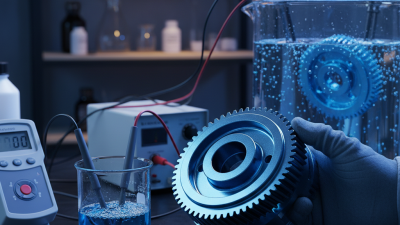
Acid copper plating uses a sulfuric acid, copper sulfate, and chloride-based bath to deposit a smooth, conductive layer. Typical copper coatings range from 5 to 25 μm. The right thickness depends on electrical load, corrosion exposure, surface geometry, and the required service life.

Thin deposits may suit decorative parts or conductive underlayers. A 10–15 μm coating is more common for moderate protection and improved conductivity. Heavy-duty components may require 20–25 μm, especially where polishing or repeated handling removes surface material. Thickness is normally verified through X-ray fluorescence, coulometric testing, or cross-sectional measurement under ASTM B487. Small errors matter.

Data from Fortune Business Insights places the global electroplating market at about USD 19.49 billion in 2023, with continued growth projected through 2032. This expansion reflects demand from electronics, automotive parts, and industrial equipment. However, market growth does not guarantee process quality. Bath temperature, current density, agitation, and pretreatment can change copper thickness across one component. Corners may build faster. Recesses may remain thin. A supplier should provide coating maps, bath-control records, adhesion results, and measurement uncertainty. In practice, 25 μm on a test panel may not mean 25 μm inside a narrow groove. That detail is easy to overlook, and it deserves more attention.

Acid Copper Bath Control: Common Operating Current Densities of 2–6 A/dm²

In acid copper plating, 2–6 A/dm² is a common working range, not a universal setpoint. Modern Electroplating, 5th edition (2010), describes how bath chemistry, agitation, and electrode geometry affect deposition. ASM Handbook, Volume 5: Surface Engineering, also discusses current distribution and coating quality. These references support a practical point: a flat coupon and a recessed component may not plate evenly at the same nominal current density.

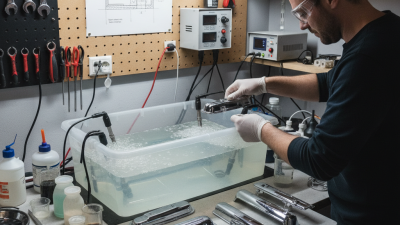
Start near the lower end when parts have deep recesses or limited solution movement. At 2 A/dm², deposition is generally more forgiving; toward 6 A/dm², poor circulation can encourage roughness or burning at edges. Watch the tank, not only the rectifier. A bright edge and a dull center are useful clues. Keep anode spacing consistent, maintain steady agitation, and record temperature, copper concentration, and additives alongside current density. Small changes matter. The numbers are useful, but they do not replace a Hull cell check or inspection of the actual workpiece. Operators can still miss a local defect; that is worth admitting.

Supplier Evaluation: Compare Process Capacity, Quality Systems, and Coating Uniformity

China Top 10 Acid Plating Suppliers Worldwide

Evaluating acid plating suppliers requires more than comparing listed output. Process capacity should match your actual order pattern, not only the largest advertised tank. Check tank dimensions, rectifier range, daily batch volume, and backup equipment. Ask how the supplier handles rush orders without changing current density or bath chemistry. A busy line can reveal more than a factory tour.

Quality systems need visible evidence. Request batch records, calibration dates, chemical analysis logs, and material traceability from incoming parts to final inspection. Useful suppliers can explain their sampling plans and corrective actions clearly. ISO certification helps, but it does not replace production discipline. A polished document is not proof.

Coating uniformity deserves close attention. Ask for thickness maps covering edges, recesses, and center areas. X-ray fluorescence testing can provide fast readings, while cross-section checks reveal hidden variation. Review results from several production lots, not one carefully selected sample. Watch for differences between shift teams. Small gaps matter. In practice, supplier data may look incomplete or uneven, and that deserves honest discussion. A strong evaluation records those weaknesses instead of quietly ignoring them. Clear communication about bath maintenance, inspection limits, and process drift often separates a dependable supplier from a merely capable one.

China Top 10 Acid Plating Suppliers Worldwide

Supplier Evaluation: Compare Process Capacity, Quality Systems, and Coating Uniformity

Data integrity note: Supplier-specific capacity, certifications, and coating results are not provided here because no independently verifiable supplier records were supplied. The anonymized rows below are evaluation slots, not a verified ranking or claims about actual companies. Complete them using current documents, site audits, and sample testing.

Evaluation slot Acid plating process scope Process capacity Quality system evidence Coating uniformity evidence Verification status
Candidate 01 Confirm acid bath chemistry, substrate compatibility, and supported coating types. Not independently verified; request line count, tank dimensions, and monthly output by part family. Request current certificates, scope, issuing body, and audit status. Request thickness maps from multiple points on representative parts; compare with drawing tolerances. Pending documentation and sample audit
Candidate 02 Confirm acid bath chemistry, substrate compatibility, and supported coating types. Not independently verified; request line count, tank dimensions, and monthly output by part family. Request current certificates, scope, issuing body, and audit status. Request thickness maps from multiple points on representative parts; compare with drawing tolerances. Pending documentation and sample audit
Candidate 03 Confirm acid bath chemistry, substrate compatibility, and supported coating types. Not independently verified; request line count, tank dimensions, and monthly output by part family. Request current certificates, scope, issuing body, and audit status. Request thickness maps from multiple points on representative parts; compare with drawing tolerances. Pending documentation and sample audit
Candidate 04 Confirm acid bath chemistry, substrate compatibility, and supported coating types. Not independently verified; request line count, tank dimensions, and monthly output by part family. Request current certificates, scope, issuing body, and audit status. Request thickness maps from multiple points on representative parts; compare with drawing tolerances. Pending documentation and sample audit
Candidate 05 Confirm acid bath chemistry, substrate compatibility, and supported coating types. Not independently verified; request line count, tank dimensions, and monthly output by part family. Request current certificates, scope, issuing body, and audit status. Request thickness maps from multiple points on representative parts; compare with drawing tolerances. Pending documentation and sample audit
Candidate 06 Confirm acid bath chemistry, substrate compatibility, and supported coating types. Not independently verified; request line count, tank dimensions, and monthly output by part family. Request current certificates, scope, issuing body, and audit status. Request thickness maps from multiple points on representative parts; compare with drawing tolerances. Pending documentation and sample audit
Candidate 07 Confirm acid bath chemistry, substrate compatibility, and supported coating types. Not independently verified; request line count, tank dimensions, and monthly output by part family. Request current certificates, scope, issuing body, and audit status. Request thickness maps from multiple points on representative parts; compare with drawing tolerances. Pending documentation and sample audit
Candidate 08 Confirm acid bath chemistry, substrate compatibility, and supported coating types. Not independently verified; request line count, tank dimensions, and monthly output by part family. Request current certificates, scope, issuing body, and audit status. Request thickness maps from multiple points on representative parts; compare with drawing tolerances. Pending documentation and sample audit
Candidate 09 Confirm acid bath chemistry, substrate compatibility, and supported coating types. Not independently verified; request line count, tank dimensions, and monthly output by part family. Request current certificates, scope, issuing body, and audit status. Request thickness maps from multiple points on representative parts; compare with drawing tolerances. Pending documentation and sample audit
Candidate 10 Confirm acid bath chemistry, substrate compatibility, and supported coating types. Not independently verified; request line count, tank dimensions, and monthly output by part family. Request current certificates, scope, issuing body, and audit status. Request thickness maps from multiple points on representative parts; compare with drawing tolerances. Pending documentation and sample audit

Recommended comparison basis: Record capacity in a defined unit (such as parts per shift or approved surface area per month), verify quality certificates directly with the issuer, and assess coating thickness using a documented method appropriate to the coating and substrate (for example, X-ray fluorescence where applicable). Uniformity acceptance limits should come from the customer drawing or agreed specification, not a generic supplier benchmark.

China’s Top 10 Acid Plating Suppliers: Compare Processes, Industries, and Export Reach

China’s Top 10 Acid Plating Suppliers: Compare Processes, Industries, and Export Reach

China’s leading acid plating suppliers differ in bath chemistry, automation, and quality control. Common processes include acid copper, nickel, tin, and zinc plating. These finishes serve automotive parts, electronics, fasteners, machinery, and renewable-energy components. Grand View Research estimated the global electroplating market at more than US$20 billion in 2023, with steady growth toward 2030. However, market figures vary by report scope. That matters when comparing suppliers.

A practical supplier review should examine tank materials, current density control, filtration, wastewater treatment, and laboratory testing. ISO 9001 certification helps, but it does not prove stable production. Ask for coating-thickness records, salt-spray results, adhesion tests, and samples from similar metals. Export reach also needs evidence. UN Comtrade data consistently places China among the major exporters of surface-treatment equipment and metal-finishing products. Yet export volume does not always mean strong technical support. Some factories respond quickly before the order, then slowly after installation. I have seen this become an expensive weakness.

Tips: Request a video audit of the plating line. Check bath temperature logs and rack designs. Compare delivered samples, not brochures. Confirm documentation, spare parts, and local service coverage. A supplier ranking is never perfectly neutral; production scale, chemistry expertise, and communication quality should receive separate scores.

Worldwide Supplier Benchmarking: Assess Certifications, Technical Support, and Lead Times

When benchmarking China’s top ten acid plating suppliers worldwide, certification evidence deserves more than a logo. Ask for current ISO 9001 records, environmental documentation, and process-specific approvals. Verify the certificate scope, issuing body, expiry date, and factory address. A certificate may cover administration, not plating performance. Request recent audit findings when disclosure is possible. This is often overlooked.

Technical support should be tested before a purchase order is released. Share your substrate, coating thickness, bath chemistry, production volume, and inspection method. A capable engineering team should provide a practical process window, not vague assurances. Ask for sample reports showing adhesion, corrosion resistance, thickness uniformity, and defect rates. During remote trials, record response times and the clarity of corrective actions. Fast replies are not enough. Experience shows that troubleshooting after shipment costs more than careful pilot validation.

Lead time comparisons need a written production schedule. Separate raw-material preparation, plating, inspection, packing, and sea or air transit. Request normal and peak-season timelines, plus a documented recovery plan for delays. Suppliers may quote factory time while excluding export handling. That gap can disrupt an installation window. I would also compare minimum order quantities, spare capacity, and communication coverage across time zones. No benchmark is perfect; forecast changes and specification revisions can expose weak planning. A small pilot order may reveal more than polished presentations.