Best Nickel Chrome Plating Manufacturers in China

China has a broad metal-finishing industry, but choosing a plating partner takes more than comparing prices or polished product photos. This guide to the best nickel chrome plating manufacturers in China considers practical factors buyers can verify: process capability, material compatibility, quality controls, communication, and delivery consistency. Nickel chrome plating can improve corrosion resistance and create a bright, durable finish, yet results depend on preparation, coating thickness, and how well each production stage is managed.

The manufacturers worth evaluating should explain their process clearly and provide relevant examples, inspection records, and realistic lead times. Ask how they handle surface defects, dimensional requirements, sample approval, and changes between trial and full production. Details matter. A smooth sample does not guarantee an identical finish across a large batch, and a low quotation may omit testing or packaging requirements. These points deserve scrutiny.

This overview is intended to help buyers ask better questions, not to promise a perfect supplier match. Product use, substrate, appearance standards, and order volume all affect the right choice. Some information may also change as factories update equipment or capacity, so confirm current details directly before making a decision. A careful comparison can narrow the field; it cannot remove every uncertainty.

Best Nickel Chrome Plating Manufacturers in China

Nickel-Chrome Plating: Process, Materials, and Common Applications

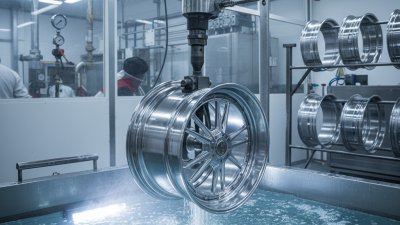
Nickel-chrome plating builds a layered finish. After cleaning and surface activation, a part receives one or more nickel deposits, followed by a thin chromium layer. Nickel provides much of the barrier against corrosion; chromium adds brightness and surface hardness. Bath chemistry and layer thickness vary with the part’s shape, service conditions, and finish specification. Trivalent and hexavalent chromium processes are both used, with controls selected for the process and facility.

The materials supply chain matters. The USGS Mineral Commodity Summaries 2025 estimated global mined nickel production at about 3.7 million metric tons in 2024. That figure describes nickel supply, not plating demand, but it highlights the scale of the metal’s industrial use. Common applications include vehicle trim, bathroom fittings, appliance handles, hand tools, and selected machine components. Decorative parts favor a consistent, reflective surface; working parts need coating adhesion and wear resistance. A mirror finish is not proof of long service life.

Good results depend on preparation. Residual oil, rough edges, or uneven current distribution can cause dull areas, pits, or peeling. Small recesses may plate differently from exposed corners. Inspection should consider coating thickness, appearance, adhesion, and the part’s intended environment. In practice, appearance can distract from performance. A bright sample may still need testing.

How to Evaluate Nickel-Chrome Plating Manufacturers in China

When evaluating nickel-chrome plating manufacturers in China, look beyond bright sample parts. Ask how they prepare each substrate, control bath conditions, and check coating thickness. Details matter. A mirror-like finish can hide uneven coverage around edges or inside narrow recesses.

Request records for a recent production run, not just a carefully selected sample. Useful evidence may include thickness readings from several points, adhesion-test results, and corrosion-test conditions. Ask how measurements are calibrated and how failed parts are handled. Compare the answers with your drawing, material, and service environment. A test result means little without its method and acceptance criteria. Ask for evidence.

Visit the production area if possible. Observe cleaning, rinsing, masking, and part handling; small process changes can affect the final finish. Check whether batch records link incoming parts to inspection results. Clarify sample approval, lead times, rework procedures, and who communicates a process deviation. A capable supplier should explain limits plainly, not promise perfect outcomes. Even a well-run facility may show variation between shifts, so a pilot batch is worth considering. The supplier’s response to an unexpected defect can be as revealing as its showroom.

Leading Nickel-Chrome Plating Manufacturers in China

Leading nickel-chrome plating manufacturers in China are evaluated by more than price or production capacity. Reliable suppliers should explain how they prepare each substrate, control bath conditions, and verify coating thickness. These steps influence appearance, adhesion, and resistance to wear. Details matter. A polished sample is useful, but it cannot replace process records or repeatable inspection results.

When comparing manufacturers, ask how they handle different base metals and part shapes. Deep recesses, sharp edges, and threaded areas can plate unevenly. Experienced teams can discuss these limits and recommend suitable checks, such as thickness measurements and adhesion testing. Ask for evidence. Clear inspection reports, traceable batch records, and practical answers are stronger signs of capability than broad claims about quality.

Communication also matters during sampling and production. A dependable manufacturer should confirm specifications, surface finish expectations, packaging needs, and acceptable tolerances before work begins. Small misunderstandings can lead to visible defects or costly rework. Buyers should review samples under realistic lighting and inspect critical areas, not just flat surfaces. No supplier is perfect; even a careful process may need adjustment for unusual geometries or changing production volumes. Honest discussion of those trade-offs helps build a more reliable working relationship.

Best Nickel-Chrome Plating Manufacturers in China

Typical decorative nickel–chromium coating thickness ranges

Decorative nickel–chromium finishes commonly use a nickel undercoat around 5–30 μm thick and a much thinner chromium topcoat, often around 0.1–0.5 μm. These are representative industry ranges, not a universal specification; actual requirements depend on the substrate, application, and service conditions.

Comparing Manufacturer Capabilities, Quality Standards, and Services

Choosing a nickel-chrome plating manufacturer in China requires more than comparing quoted prices. Review its capacity for surface preparation, nickel-layer control, and final chromium deposition. These steps influence appearance, adhesion, and corrosion resistance. Ask how the supplier handles recessed areas, sharp edges, and complex shapes, where coating thickness can vary.

Quality claims should come with records. Request sample inspection reports showing coating thickness, adhesion checks, and relevant corrosion-test results. Ask which recognized standards and test methods apply to your part and operating conditions; one specification may not fit every use. Details matter. A tidy certificate is useful, but it cannot replace consistent batch records and clear acceptance criteria.

Service matters after production begins. Check whether the manufacturer can review drawings, flag difficult areas, and provide trial parts before larger runs. Confirm how it tracks rejected pieces, protects finished surfaces during packing, and responds to nonconformities. Ask about lead times and communication during delays, too. A low quote may leave important questions unanswered. I would compare evidence and technical support, not just promised capabilities; even a capable supplier can miss expectations when requirements are vague.

Choosing the Right Chinese Plating Manufacturer for Your Project

Best Nickel Chrome Plating Manufacturers in China

Choosing a Chinese plating manufacturer starts with the part, not the price quote. Specify the base metal, dimensions, operating environment, appearance, and expected service life. A bathroom fitting faces different corrosion risks from an automotive trim component. Ask how the supplier controls cleaning, nickel-layer thickness, chromium deposition, and rack placement. Small details matter.

Request recent inspection records and test samples made with your actual material. Check coating thickness at several points, including edges and recessed areas; uneven coverage can be easy to miss on a polished sample. ISO 1456 covers electrodeposited nickel and nickel-chromium coatings, while ASTM B456 addresses related coating systems. Agree in writing on applicable tests, acceptance limits, and reporting methods. A certificate alone is not enough.

Supply chains deserve attention, too. The USGS Mineral Commodity Summaries 2025 estimates global nickel mine production at about 3.7 million metric tons in 2024, with Indonesia accounting for roughly 2.2 million. These figures describe mined nickel, not plating quality, but they show why buyers should ask about material sourcing and consistency. Visit the production line if possible. Observe bath analysis, wastewater controls, and how rejected parts are traced. A neat sample can still hide weak process control. I would not choose on price alone, though comparing quotations is useful when their technical scope matches.

Best Nickel Chrome Plating Manufacturers in China - Choosing the Right Chinese Plating Manufacturer for Your Project
Evaluation Dimension What to Specify or Check Useful Evidence to Request
Application and finish type Distinguish decorative nickel-chromium plating from functional hard-chromium plating. Their purposes and coating requirements differ. A proposed process route and finish specification matched to the part’s appearance, corrosion, wear, and service requirements.
Substrate and preparation Identify the base material, heat treatment, surface condition, and any prior coating. Pretreatment and activation depend on the substrate. Written pretreatment steps, sample-part evaluation, and confirmation that the proposed process is suitable for the specified material.
Coating layers and thickness For decorative finishes, the coating may include nickel and a thin chromium topcoat; copper may be included as an underlayer. Set layer thicknesses on the drawing or purchase specification—there is no single thickness suitable for every part. Layer-by-layer thickness requirements, measurement locations, and inspection records. X-ray spectrometric coating-thickness measurement is covered by ISO 3497.
Applicable coating specification ISO 1456 covers electrodeposited nickel, nickel plus chromium, copper plus nickel, and copper plus nickel plus chromium coatings. ASTM B456 covers electrodeposited copper-plus-nickel-plus-chromium and nickel-plus-chromium coatings. The exact standard, edition, coating classification, and acceptance requirements stated in the supplier’s quotation and inspection plan.
Chromium chemistry Confirm whether the process uses hexavalent or trivalent chromium. Do not assume the chemistries are interchangeable; confirm suitability against the customer’s requirements and applicable regulations. A written declaration of the process chemistry and relevant regulatory or restricted-substance documentation for the supplied finish.
Corrosion testing ISO 9227 specifies salt-spray test methods. A test method alone does not define a universal pass/fail duration; agree on exposure conditions and acceptance criteria for the part. A test report identifying the method, exposure time, sample condition, evaluation criteria, and result.
Adhesion and appearance Define acceptable appearance, such as color, gloss, coverage, and permitted defects. ASTM B571 describes qualitative adhesion tests for metallic coatings; select a test appropriate to the part and coating. Approved finish samples, visual acceptance limits, and documented adhesion inspection results where required.
Part geometry and masking Recesses, blind holes, sharp edges, and complex shapes can affect coating distribution. Identify areas that must be plated, masked, or kept within dimensional limits. A drawing review, agreed masking plan, and thickness or dimensional checks at critical locations.
Quality documentation and production control Agree on lot identification, sampling, inspection frequency, nonconformance handling, and change notification before production begins. A sample inspection report, traceability format, process-control records, and the supplier’s procedure for handling rejected parts.
Quotation and delivery scope Compare quotations using the same drawing revision, finish specification, quantity, packaging, inspection requirements, and delivery terms. A written quotation that separates plating, tooling or masking, testing, packaging, lead time, and any stated exclusions.