China Top Ferric Sulfate Wastewater Treatment Supplier?
Choosing a China top Ferric Sulfate Wastewater Treatment supplier requires more than comparing prices. The right partner should understand industrial water chemistry, production consistency, and site-specific treatment needs. Ferric sulfate may support phosphorus removal, suspended solids reduction, and improved clarification. However, dosage depends on wastewater composition, pH, temperature, and competing contaminants.
A reliable supplier should provide technical data, batch test results, safety documents, and clear product specifications. Look for practical details, such as ferric content, basicity, insoluble matter, packaging options, and storage guidance. A professional manufacturer should explain how its product performs in municipal plants, textile facilities, food factories, or mining operations. Real experience matters. Laboratory data alone may not represent a busy treatment line at 2:00 a.m.
Supplier verification also deserves careful attention. Check factory capabilities, quality-control procedures, export experience, response times, and after-sales support. Independent testing can confirm product consistency before large-volume purchasing. Certifications may strengthen trust, but they should be verified rather than accepted at face value. No supplier is perfect. Even experienced buyers can overlook moisture changes, delivery delays, or poor communication.
The strongest choice balances chemistry, documentation, production capacity, and service. It should offer useful guidance without promising impossible results. This introduction examines how to evaluate China-based suppliers for Ferric Sulfate Wastewater Treatment and how to reduce avoidable purchasing risks. Practical judgment remains essential. Performance should be proven in your water, not only in a brochure.
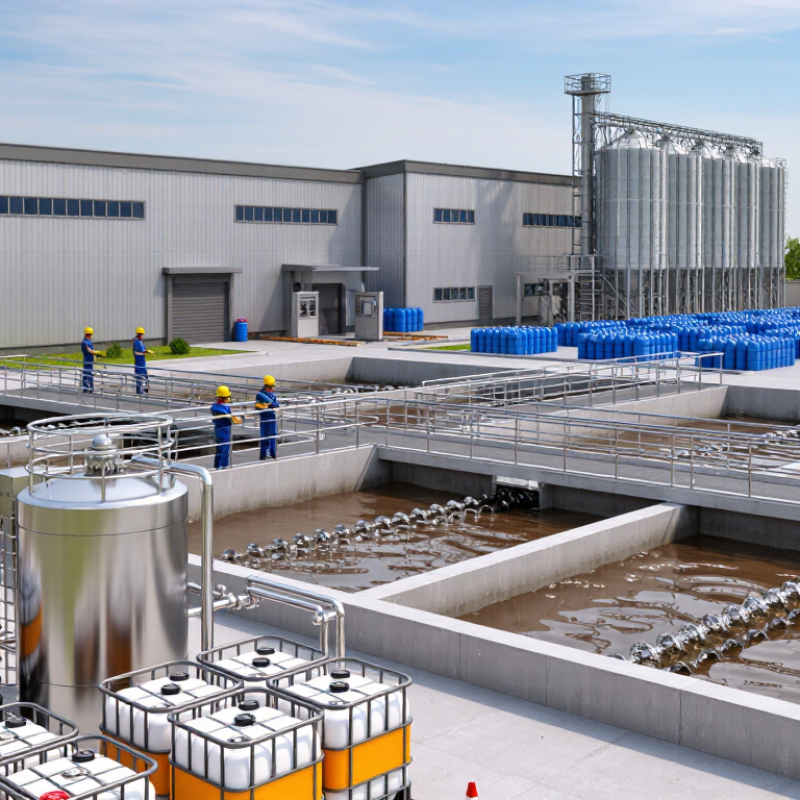
Ferric Sulfate: Definition, Properties, and Wastewater Treatment Uses
Ferric sulfate is an inorganic coagulant with the formula Fe₂(SO₄)₃. It usually appears as a yellow-brown liquid or solid. In water, it hydrolyzes and forms ferric hydroxide flocs. These flocs capture suspended particles, colloids, phosphate, and some dissolved metals. The process can noticeably improve clarity within minutes.
Its performance depends on pH, alkalinity, temperature, and mixing energy. Operators normally confirm dosage through jar testing, not assumptions. A slightly excessive dose may increase sludge and residual sulfate. A low dose may leave water visibly cloudy. It is not a universal fix. The U.S. EPA Nutrient Control Design Manual identifies ferric salts as practical phosphorus-control chemicals, but also highlights chemical costs and sludge handling. Those details matter during plant design.
Demand remains significant. UN-Water’s 2024 SDG 6 Synthesis Report states that only 56% of domestic wastewater flows were safely treated in 2022. The WHO/UNICEF Joint Monitoring Programme reported that 2.2 billion people lacked safely managed drinking water in 2022. These figures reinforce the need for dependable treatment chemicals and careful process control. For buyers evaluating a China-based supplier, technical evidence matters more than a low quotation. Request soluble iron data, acidity, insoluble content, batch traceability, and safe handling documentation. A reliable supplier should also support jar tests and explain expected sludge production. Laboratory results can still differ from full-scale performance. That gap deserves attention.
How Ferric Sulfate Supports Coagulation and Pollutant Removal
How Ferric Sulfate Supports Coagulation and Pollutant Removal
Ferric sulfate supports wastewater treatment by destabilizing suspended particles. In water, it hydrolyzes and forms ferric hydroxide flocs. These sticky flocs capture turbidity, colloids, and some dissolved organic matter. Phosphorus can also bind with iron compounds and settle more easily. The process is visible in a jar test: cloudy water becomes clearer as brownish flocs grow.
Chemical dosing needs careful control. Operators should check pH, alkalinity, temperature, and mixing intensity before selecting a dose. Rapid mixing spreads ferric sulfate through the wastewater. Gentle mixing then encourages larger, stronger flocs. Excessive agitation can break them apart. Too little mixing leaves untreated pockets. Small details matter.
A practical trial may reveal unexpected results. Our first dose can remove turbidity but increase sludge production. A higher dose may improve phosphorus removal while lowering pH too sharply. That trade-off requires measurement, not guesswork. Settled water should be tested for turbidity, phosphorus, iron residuals, and chemical oxygen demand. Sludge volume also deserves attention. Clear effluent alone is not enough. A jar test can guide the design, but full-scale performance may differ because flow, temperature, and pollutant strength constantly change. Regular sampling keeps the treatment decision reliable.
How Ferric Sulfate Supports Coagulation and Pollutant Removal
Ferric sulfate hydrolyzes in water to form positively charged iron hydroxide flocs. These flocs neutralize particle charges and capture suspended solids, phosphorus, color-forming compounds, and part of the organic load. The chart shows representative midpoint removal efficiencies from commonly reported operating ranges; actual performance depends on pH, dosage, mixing, temperature, and influent quality.
Key Criteria for Evaluating Chinese Ferric Sulfate Suppliers
China Top Ferric Sulfate Wastewater Treatment Supplier?
Key Criteria for Evaluating Chinese Ferric Sulfate Suppliers
A capable supplier should prove performance beyond a low quotation. The UN-Water World Water Development Report 2024 notes that agriculture uses about 70% of global freshwater withdrawals. Efficient coagulation therefore matters, especially where water reuse is expanding. Ask for active ferric content, basicity, insoluble matter, pH, and trace-metal results. These figures should match each batch’s certificate of analysis.
A practical evaluation needs jar testing with your actual wastewater. Measure turbidity, phosphorus removal, sludge volume, and final pH. Compare dosage, not only product price. AWWA Standard B406 provides a recognized framework for ferric sulfate quality and testing.
Suppliers should also provide safety data sheets, production traceability, packaging specifications, and transport records. Small details matter.
Factory audits can reveal more than polished documents. Check laboratory equipment, retained samples, calibration records, and complaint procedures. The UNESCO World Water Development Report 2017 estimated that over 80% of global wastewater was discharged without treatment. Demand is real, but quality can still vary.
I would question any supplier promising identical results without pilot data. That claim sounds convenient, not technically complete. A second laboratory test is worth the delay.
China’s Ferric Sulfate Manufacturing Standards and Quality Controls
China Top Ferric Sulfate Wastewater Treatment Supplier?
China’s Ferric Sulfate Manufacturing Standards and Quality Controls
China’s ferric sulfate manufacturers serve municipal, industrial, and drinking water treatment projects. A dependable supplier should control quality from raw materials to final packaging. Production teams commonly verify iron content, basicity, insoluble matter, moisture, and solution pH. These figures affect floc formation, sludge volume, and dosing accuracy.
Reliable factories keep batch records and retain production samples. Each lot should have a clear test report, production date, and traceable reference number. Experienced quality staff also inspect color, particle condition, and package sealing. Small details matter. Torn bags can absorb moisture during transport.
Laboratory testing should follow recognized chemical methods and calibrated equipment. Independent testing can strengthen confidence, especially for large water treatment contracts. Practical trials remain important. Operators should test the product with local wastewater because laboratory water rarely matches field conditions. Jar tests can reveal the correct dose and mixing speed before full-scale use.
No control system is flawless. Sampling may miss uneven material inside a large batch. Human recording errors can also occur. Suppliers that review complaints, correct procedures, and document improvements show stronger professional discipline. Buyers should request recent certificates, safety data, sample quantities, and storage guidance before placing an order. A technically capable supplier explains limitations clearly, rather than promising identical results for every wastewater source.
Selecting the Right Ferric Sulfate Supplier for Treatment Applications
Selecting the Right Ferric Sulfate Supplier for Treatment Applications
Choosing a ferric sulfate supplier requires more than comparing price per tonne. Treatment performance depends on alkalinity, pH, raw-water temperature, and pollutant loading. Ferric sulfate can support phosphorus removal, turbidity reduction, and sludge conditioning, but dosage must follow jar testing. UN-Water’s 2024 wastewater update reports that 42% of household wastewater was not safely treated in 2022. This figure highlights the need for dependable treatment chemicals and consistent process control. A qualified supplier should provide batch traceability, concentration data, impurity limits, safety documentation, and reliable delivery records. Request recent certificates of analysis. Check actual plant references, not only laboratory claims.
Tips: Ask for a representative sample and run site-specific jar tests before signing a long contract. Compare delivered cost, not only the chemical price. Review storage conditions carefully, because ferric sulfate can affect tanks, pumps, and pipework through corrosion. Suppliers with technical support can help adjust dosing during seasonal changes. The American Water Works Association’s treatment guidance also emphasizes process testing and operational control. Still, guidance is not a substitute for local evidence. A product may perform well in one plant and poorly in another. I would also question unusually low quotations; the hidden cost may appear later through higher sludge volume, blocked equipment, or unstable phosphorus results. Document trial results, delivery consistency, and operator feedback before approval.