Ultimate Tips for Successful Auto Chrome Plating Process?
In the world of auto chrome plating, achieving the perfect finish requires both skill and knowledge. Joe Sampson, a recognized expert in this field, states, "Precision and patience are key to success in auto chrome plating." His insight highlights the need for careful attention throughout the plating process.
The auto chrome plating process is intricate. Each step, from surface preparation to final polishing, influences the final look. Improper surface preparation often leads to uneven finishes. It's a common mistake that can mar even the best materials. Additionally, environmental factors can affect the plating outcome. Humidity and temperature play crucial roles in achieving that desired shine.
Many professionals face challenges with auto chrome plating. They may overlook the importance of using high-quality chemicals. Neglecting safety measures can also lead to significant issues. Striving for perfection often requires trial and error. However, reflecting on past experiences can lead to greater expertise. Continuous learning is essential in navigating this complex process.

Understanding the Basics of Auto Chrome Plating
Auto chrome plating is a fascinating process that adds a stunning finish to automotive parts. Understanding its basics is crucial for achieving top results. This process involves applying a layer of chromium onto the surface of metal parts. The chromium enhances appearance, durability, and corrosion resistance. It creates a mirror-like finish that many automotive enthusiasts adore.
The initial steps in chrome plating are essential. Preparing the surface is key. This includes cleaning and polishing to remove any impurities. Inadequate preparation can lead to uneven coatings or peeling later. The plating solution itself is a mixture of chemicals. Proper handling is necessary to ensure safety and effectiveness. Monitoring the plating time and current parameters will impact the thickness and quality of the chrome layer.
However, the process is not without challenges. Factors like temperature and pH levels can affect the final result. An overly hot solution can create bubbles, while too cold can slow the reaction. Each part varies, and experience plays a significant role in adjustments. Reflecting on past projects can help improve future attempts. Being attentive to details makes a substantial difference in achieving that flawless chrome look.
Essential Tools and Materials for Successful Chrome Plating
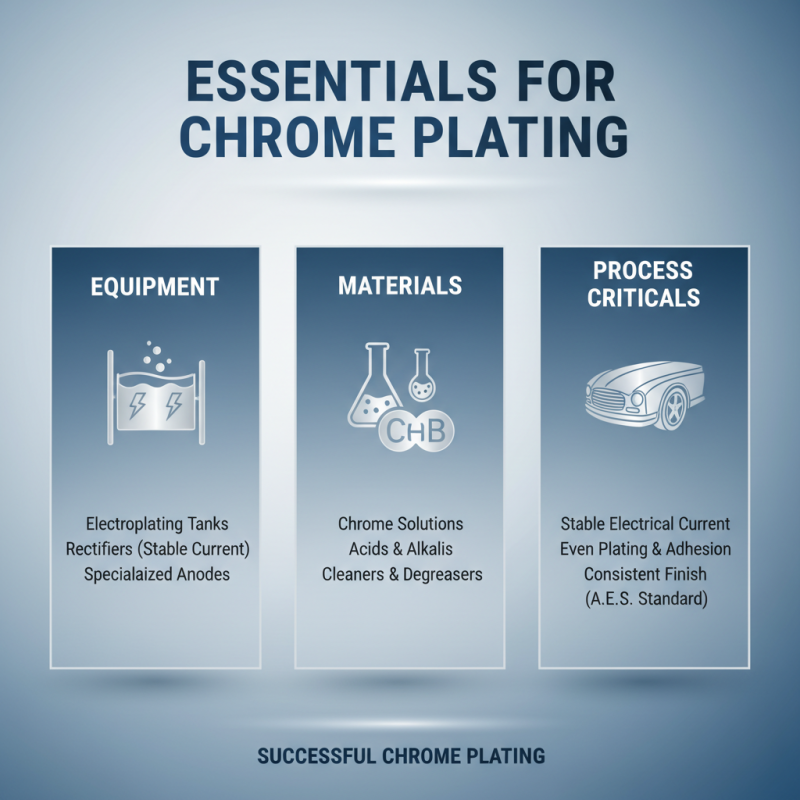
Chrome plating requires precise tools and materials to ensure a successful finish. At the core of this process are equipment such as electroplating tanks, rectifiers, and specialized anodes. According to the American Electroplaters Society, maintaining a stable electrical current is crucial for even plating. Fluctuations can lead to poor adhesion and a dull, inconsistent appearance.
Chemicals also play a vital role. Plating solutions typically contain chromium sulfate or chromium chloride. Safety Data Sheets (SDS) emphasize proper handling of these substances, as they can be hazardous. Regular testing of the solution pH and temperature can optimize results, reducing defects like pinholes or rough surfaces.
While the setup may seem straightforward, many factors can cause complications. For instance, inadequate surface preparation can result in poor bonding. Abrasion or sandblasting can be used to clean substrates effectively, but over-abrading can create further issues. It’s important to strike a balance that allows for a clean surface without altering the item's geometry. Consider experience and knowledge crucial in this delicate operation. Reflection on past results often leads to improved techniques.
Step-by-Step Guide to Preparing Surfaces for Chrome Plating
The preparation of surfaces for chrome plating is a crucial step that directly impacts the quality of the finish. Proper surface preparation enhances adhesion, durability, and overall aesthetic appeal. According to industry reports, more than 40% of adhesion failures in chrome plating occur due to insufficient surface preparation. A clean and smooth substrate is essential.
Start by thoroughly cleaning the surface. Remove any contaminants, oils, or residues. This can be achieved using ultrasonic cleaning or chemical degreasing methods. After cleaning, inspect the surface for imperfections. Small scratches or pitting can affect the final look. Sanding or polishing may be necessary to achieve a flawless surface.
After smoothing the surface, you should apply a suitable pre-treatment. Common methods include acid etching or applying a nickel strike layer. These steps help to create a better bonding surface for the chrome. Inadequate pre-treatment can lead to issues like peeling or dull finishes, which are frustrating and costly. Remember, attention to detail is key in every step of the process. Proper research and following best practices can significantly improve outcomes in chrome plating.
Common Challenges in Auto Chrome Plating and How to Overcome Them
Auto chrome plating presents unique challenges, often tied to pretreatment and process control. A common issue is poor adhesion of chrome to the base metal. According to industry reports, about 25% of plating failures are linked to inadequate surface preparation. Proper cleaning and etching methods are critical. Using a phosphoric acid solution can enhance the metal surface, ensuring better adhesion.
Another challenge lies in achieving a uniform chrome layer. Variations in voltage or current can lead to uneven deposition. Research indicates that maintaining consistent parameters during the process can reduce this inconsistency. A meticulous monitoring system should be employed. Regular calibration of equipment helps maintain the desired output.
Environmental factors also play a role. Temperature fluctuations can affect plating quality. An optimal operating temperature is crucial, typically around 55-60°C. Installation of temperature control systems can mitigate this challenge. Additionally, inspecting for imperfections post-process is essential. Identifying and addressing defects early can save time and reduce rework.
Maintaining and Caring for Chrome-Plated Automotive Parts
Chrome-plated automotive parts require careful maintenance to ensure longevity and durability. High-quality chrome plating can resist corrosion and enhance aesthetics, but neglect can lead to degradation. According to industry reports, up to 20% of chrome-plated components can experience wear within the first two years if not properly cared for.
Routine cleaning is essential. Use a soft cloth and mild soap to remove dirt and debris. Avoid harsh chemicals, as they can strip away the protective coating. Regular inspections can help identify early signs of damage. If spotting or peeling occurs, consider re-plating. Timely maintenance can significantly prolong the life of these parts.
Environmental factors also play a crucial role. Exposure to salt, moisture, and UV rays accelerates wear. Consider garage storage for vehicles with chrome accents. A protective wax can also provide a barrier against the elements. The reality is, no matter how well you maintain them, chrome parts will gradually wear. Reflecting on the long-term care of these components is vital for any automotive enthusiast.
Ultimate Tips for Successful Auto Chrome Plating Process? - Maintaining and Caring for Chrome-Plated Automotive Parts
| Tip |
Description |
Frequency of Maintenance |
Recommended Products |
| Regular Cleaning |
Use a mild soap and water solution to remove dirt and grime. |
Weekly |
Gentle automotive soap |
| Protective Coating |
Apply a protective wax or sealant to maintain shine. |
Monthly |
Car wax or polymer sealant |
| Avoid Abrasives |
Never use abrasive cleaners or pads which can scratch the surface. |
Always |
Soft microfiber cloths |
| Inspect Regularly |
Check for signs of corrosion or damage to the plating. |
Monthly |
None |
| Proper Storage |
Store chrome parts in a dry place to prevent moisture build-up. |
As needed |
Protective coverings |