
How to Choose an Electric Dump Truck in 2026?

Choosing an Electric Dump Truck in 2026 is not just a question of battery size. It means matching payload, range, charging access, and duty cycle to the actual worksite. The International Energy Agency’s Global EV Outlook 2024 reports that electric-truck sales rose by 35% in 2023, reaching nearly 54,000 vehicles worldwide. That growth signals momentum, but it does not prove that every dump-truck operation is ready to switch.

Start with the route. A truck climbing a steep quarry road with a full load faces different demands from one making short, predictable trips across a construction site. Record daily distance, loaded climbs, idle time, payload, and available charging hours. Then ask suppliers for operating data under comparable conditions—not just brochure range. Charging setup matters, too: a high-capacity truck is less useful if the site’s electrical supply cannot support its schedule.

IEA Executive Director Fatih Birol has emphasized the accelerating role of electrification in transport; however, no dump-truck-specific quotation from him is verified here, so a direct quote would be misleading. That caution matters. Published market figures often combine different truck types, and real-world performance depends on temperature, terrain, load, and operator practice. A careful comparison should also include battery warranty, service response, tire wear, and expected downtime. Small details count. One overlooked charging window can disrupt a shift. Use this guide to weigh the evidence, test supplier claims, and decide whether an Electric Dump Truck fits your site today—or whether more operating data is still needed.
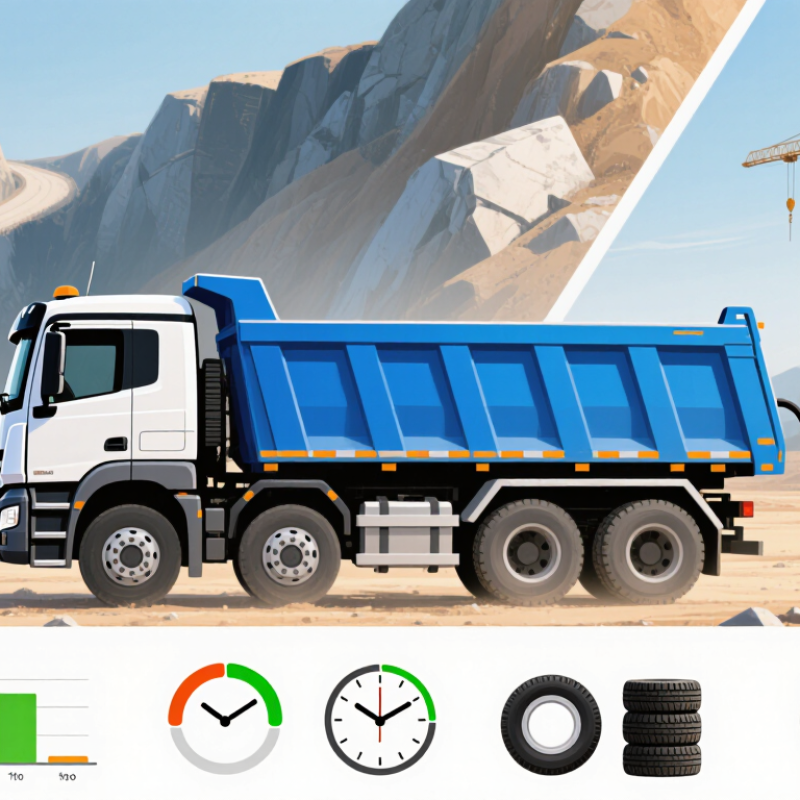
How to Choose an Electric Dump Truck in 2026?

Define the Work Requirements and Operating Conditions

Define the Work Requirements and Operating Conditions

Start with the job, not the truck’s headline payload. Record the typical load weight, material type, haul distance, and number of trips per shift. Wet soil can weigh much more than loose, dry material. Small details matter. Note whether the truck works on compacted roads, muddy ground, or rough quarry tracks.

Map the route in both directions. Include loaded uphill sections, steep ramps, tight turns, and time spent queuing under the loader. A short route with repeated climbs can demand more energy than a longer, level haul. Estimate the full shift, including breaks and delays, rather than relying on ideal conditions. The first estimate is often wrong, so compare it with actual site records when possible.

Then check how the site can support charging. Identify available power, charging windows, and where the truck can safely park between shifts. Cold mornings, hot afternoons, and long idle periods may affect usable range. If the truck must operate through multiple shifts, charging time becomes part of the production plan. Leave a practical energy reserve for detours or heavier loads; planning to use every last unit of range looks efficient, but can be fragile. A short trial on the real route can reveal issues that a spreadsheet misses.

Compare Payload, Range, Power, and Charging Specifications

Choosing an electric dump truck starts with the worksite, not the biggest number on a specification sheet. Compare rated payload with the truck’s gross vehicle weight and body configuration. A truck carrying wet soil or crushed stone may reach its limit sooner than one hauling lighter material. Check how payload changes on steep grades and rough access roads. Numbers can mislead.

Range should reflect a full shift, including loaded climbs, empty returns, waiting, and cold starts. Ask whether the stated figure comes from a realistic duty cycle or controlled testing. Battery capacity alone does not tell you how far the truck will travel between charges. If possible, compare energy use over a familiar route, with similar loads and terrain. Small details matter.

Power affects more than speed. Check gradeability, torque delivery, and how smoothly the truck starts under load; these can shape daily productivity and driver confidence. Then match charging power to the site’s electrical supply and available break times. A fast charger helps only when the infrastructure can support it. Measure the parking area, too, and confirm cable reach. I would still treat projected savings cautiously: shifts, weather, and charging delays can vary more than a neat spreadsheet suggests.

Assess Battery Technology and Charging Infrastructure

Battery capacity matters only when it matches the truck’s actual shift. Estimate energy use from payload, haul distance, gradients, idle time, and weather. Ask for operating data from routes similar to yours, not just a laboratory range. A truck climbing a muddy ramp with a full load may use far more energy than one working on level ground. Cold mornings matter. So does battery aging.

Check the usable battery capacity, charging rate, and thermal management system together. A large pack can add weight, while frequent fast charging may affect long-term battery health. Request clear details on warranty coverage and expected capacity retention. Those figures are estimates, not promises. I would compare them with a realistic duty cycle and leave room for delays or unusually demanding days.

Charging infrastructure can decide whether the truck is productive. Measure how long it sits between shifts, then check whether the site can supply enough electrical power during that window. For example, a truck parked for only 30 minutes may not recover enough energy from a modest charger. Consider cable reach, weather protection, charger uptime, and backup options. A site visit helps expose awkward layouts that a proposal may overlook. The plan may still need revision after real-world use.

Calculate Total Cost of Ownership and Expected Productivity

How to Choose an Electric Dump Truck in 2026?

Compare total cost of ownership over the truck’s working life, not just its purchase price. Include financing, charger installation, electricity, maintenance, battery replacement assumptions, and resale value. The IEA’s Global EV Outlook 2024 reports that average lithium-ion battery pack prices fell 14% in 2023, to about $139 per kilowatt-hour. That is useful market context, not a guaranteed discount on a complete dump truck. Get a site-specific quote.

Productivity needs equally careful measurement. Record payload, loaded and empty distance, gradients, cycle time, shifts per day, and charging windows. Then compare expected daily tonnes and operating hours with a diesel truck doing the same work. For example, a truck that saves energy but loses a shift to charging may raise cost per tonne. Check whether charging can happen during scheduled breaks, and ask for performance data from comparable duty cycles. Small details matter.

Build a spreadsheet using your own energy tariff and fuel invoices. Model high and low utilization, seasonal temperatures, and downtime; these assumptions can change the result. I would not trust a single “payback” figure. It may look precise, yet depend on optimistic uptime or resale value. Record every assumption, then test what happens when productivity falls by 10%.

How to Choose an Electric Dump Truck in 2026? — Calculate Total Cost of Ownership and Expected Productivity

Five-year planning comparison for a 40-tonne-payload haul truck. Figures are illustrative estimates in USD, not supplier quotes.

Metric Diesel Dump Truck Battery-Electric Dump Truck Calculation Basis / Notes
Duty Cycle and Productivity Assumptions
Rated payload 40 tonnes 40 tonnes Same rated payload is assumed for a fair comparison; confirm payload under the actual body and site configuration.
Scheduled operating time 2,000 hours/year; 10,000 hours over 5 years 2,000 hours/year; 10,000 hours over 5 years Five-year ownership period, excluding financing and taxes.
Effective productive availability 85% 82% Illustrative share of scheduled hours available for productive hauling; electric availability includes assumed charging and maintenance downtime.
Productive hauling hours over 5 years 8,500 hours 8,200 hours Scheduled hours × effective productive availability.
Average haul cycles per productive hour 3.0 3.0 Site-specific assumption; actual cycles depend on route length, grade, loading, dumping, traffic, and operator practice.
Estimated annual moved material 204,000 tonnes 196,800 tonnes Payload × cycles per hour × productive hours per year.
Estimated five-year moved material 1,020,000 tonnes 984,000 tonnes Payload × cycles per hour × productive hauling hours over five years.
Purchase and Operating Cost Assumptions
Initial vehicle purchase price $450,000 $750,000 Illustrative planning inputs; actual prices vary by specification, market, and contract.
Charging infrastructure allocation $0 $60,000 Electric-truck site equipment and installation allocation; excludes major grid upgrades.
Energy use per productive hauling hour 38 litres of diesel 120 kWh of electricity Planning estimate; electric energy includes charging losses as reflected in the assumed average.
Energy price assumption $1.15/litre $0.12/kWh Illustrative delivered fuel and electricity prices; demand charges or time-of-use rates may change results.
Energy cost per productive hauling hour $43.70 $14.40 Energy use × assumed energy price.
Maintenance and repair cost per productive hauling hour $25.00 $16.00 Illustrative average; validate against local service, parts, labour, and duty-cycle records.
Tire cost per productive hauling hour $12.00 $12.00 Assumed equal for comparison; tire life depends on payload, haul road, speed, and tire management.
Battery replacement / degradation reserve over 5 years $0 $50,000 Planning reserve only; not a prediction of replacement. Check warranty terms, usable capacity, and expected duty cycle.
Five-Year Total Cost of Ownership Estimate
Energy cost over 5 years $371,450 $118,080 Energy cost per productive hour × productive hauling hours over five years.
Maintenance and repair cost over 5 years $212,500 $131,200 Maintenance cost per productive hour × productive hauling hours over five years.
Tire cost over 5 years $102,000 $98,400 Tire cost per productive hour × productive hauling hours over five years.
Estimated five-year TCO $1,135,950 $1,207,680 Purchase price + infrastructure + energy + maintenance + tires + battery reserve.
TCO per scheduled hour $113.60 $120.77 Five-year TCO ÷ 10,000 scheduled hours.
Estimated TCO per tonne moved $1.11/tonne $1.23/tonne Five-year TCO ÷ estimated five-year tonnes moved; sensitive to productivity and local energy prices.
Estimated five-year TCO difference $71,730 higher for the electric scenario Based only on the assumptions shown; the result can change materially with charging, availability, utilization, and energy costs.

How to use this comparison: Replace the illustrative inputs with site measurements, including route distance and grade, payload, cycle time, actual energy prices, charging strategy, productive availability, and maintenance records. Estimates exclude financing, taxes, insurance, resale value, and emissions costs or incentives.

Verify Safety, Service Support, and Regulatory Compliance

Choosing an electric dump truck in 2026 means checking more than payload and range. Safety should be visible in the cab and workshop. Inspect sightlines around the body, camera coverage, access steps, braking response, and emergency isolation controls. Ask how the truck behaves on a sloped, uneven route with a realistic load. A smooth yard demonstration can hide difficult conditions. It is worth testing on the worksite, not just admiring the specifications.

Verify that safety features and required documentation match the rules in your operating region. Request current certificates, inspection records, and clear guidance on battery handling and charging. Then examine service support closely. Ask how quickly technicians can respond, where common replacement parts are held, and whether local teams can diagnose battery faults. Confirm warranty coverage and scheduled maintenance needs in writing. Some answers may sound reassuring but remain vague; press for details and realistic response times.

Tips: Bring your route, load profile, and charging schedule to the dealer. Ask for a maintenance plan and a sample compliance file. Check emergency procedures with your operators, too. A few extra questions now can prevent costly surprises later.