Top Directional Hydraulic Valve Trends at 2026 Canton Fair?
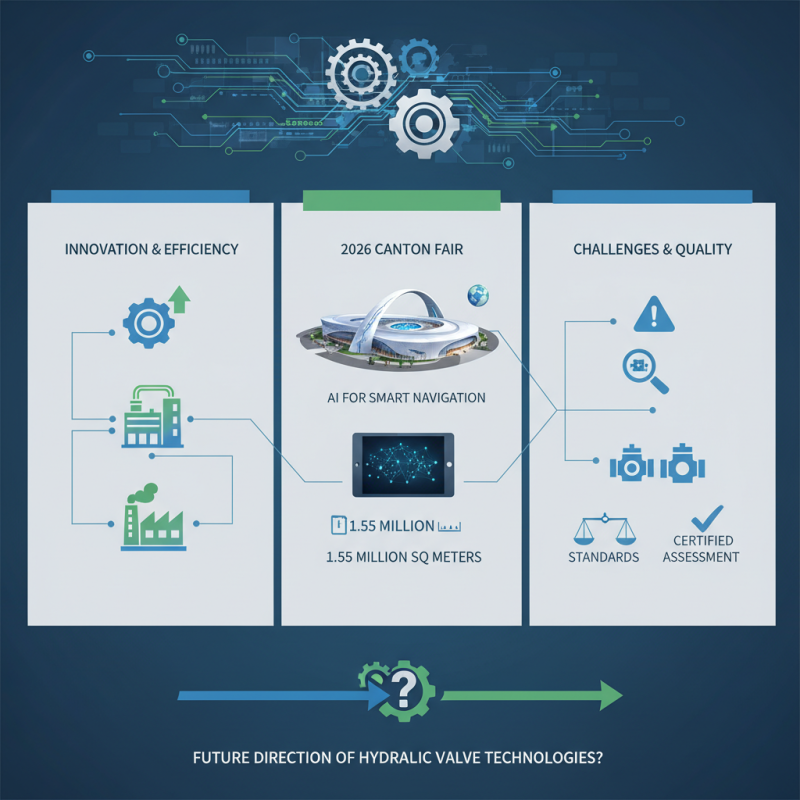
The upcoming 2026 Canton Fair promises to be a pivotal event for the Directional Hydraulic Valve industry. Industry expert Dr. John Smith emphasizes, "Innovation in directional hydraulic valves drives efficiency across various applications." This sentiment reflects the growing need for advanced hydraulic solutions in manufacturing and machinery.
At the fair, participants can expect a showcase of cutting-edge technologies and designs. The integration of AI for smart navigation makes finding specific suppliers more efficient. With a massive exhibition space of 1.55 million square meters, it offers a unique opportunity to explore the latest in directional hydraulic valves.
However, challenges remain. Not all advancements meet industry standards consistently, leading to potential quality concerns. It will be essential for buyers to conduct thorough assessments. The emphasis on quality and certified suppliers remains crucial in this evolving market landscape. The fair will be a testing ground for the future direction of hydraulic valve technologies.
Emerging Technologies in Directional Hydraulic Valves for 2026
The Canton Fair 2026 will showcase significant advancements in directional hydraulic valves. Emerging technologies promise to enhance efficiency and performance. Smart valves are a major focus. These valves integrate IoT capabilities, allowing real-time monitoring. Users can track their functionality through applications. This connectivity could lead to proactive maintenance, reducing downtime.
Additionally, variable flow control is gaining traction. This innovation enables precise adjustments to hydraulic flow rates. It could result in better energy savings. Many industries may benefit from reduced operational costs. However, implementing these technologies requires investment and training. Companies must be ready to adapt.
There are also challenges to consider. The complexity of the technology may overwhelm smaller manufacturers. They could face difficulty in keeping up. Regulatory hurdles may arise with new innovations. Adapting to new standards can be time-consuming. The path to embracing these trends is not straightforward, raising questions about the speed of adoption.
Market Demand and Trends Shaping Directional Hydraulic Valves
The directional hydraulic valve market is evolving rapidly. Various trends are shaping the landscape. Automation is a key driver. Industries are moving towards smart solutions. These valves are now expected to integrate with control systems seamlessly. Valves must adapt to varying applications. This flexibility attracts diverse industries.
Market demand is growing for energy-efficient solutions. Companies prioritize sustainability and performance. Innovations in material technology are crucial. Lightweight and durable components enhance the overall efficiency. However, challenges remain in balancing cost with quality. Some manufacturers struggle to meet these new expectations. Testing and validation processes are becoming more complex.
Another trend is the rise of custom solutions. Standard products no longer fit all needs. Tailored valves can optimize operations. Yet, not all requests are practical. Designers must consider practicality and feasibility. Misalignment between customer expectations and actual capabilities can lead to disappointment. Continuous feedback loops are essential for improvement.
Innovative Designs and Features of Directional Hydraulic Valves
The 2026 Canton Fair is set to showcase remarkable innovations in directional hydraulic valves. Recent industry reports indicate that the market for these valves is projected to grow at a compound annual growth rate (CAGR) of 5.2% through 2027. Enhanced efficiency and performance are driving this growth. Companies are focusing on making valves that minimize energy loss and improve responsiveness.
One exciting trend is the integration of smart technology into valve designs. These innovations allow for real-time monitoring and control. For example, some valves now feature IoT connectivity, enabling better data collection for maintenance and performance evaluation. Additionally, compact designs are becoming common, saving space in machinery while maintaining strength.
However, challenges remain. Many manufacturers struggle to meet the rising demand for eco-friendly materials. The industry faces pressure to reduce its carbon footprint. Inconsistent quality in some components also raises concerns among users. As demands for innovation increase, companies must address these issues to succeed. Collaboration and continuous improvement will shape the future of directional hydraulic valves.
Top Directional Hydraulic Valve Trends at 2026 Canton Fair
| Feature | Description | Innovation Type | Market Impact |
| Smart Sensors | Integrated sensors for real-time monitoring of valve performance. | Automation | Improved efficiency and predictive maintenance. |
| Compact Design | Reduced footprint for easier installation in confined spaces. | Engineering | Saves space and reduces equipment costs. |
| Modular Components | Valves that can be customized with interchangeable parts. | Customization | Increased flexibility for manufacturers and users. |
| Eco-friendly Materials | Use of sustainable materials in valve construction. | Sustainability | Reduces environmental impact and complies with regulations. |
| Wireless Control | Control valves remotely through wireless technology. | Technological Advance | Increases accessibility and minimizes manual intervention. |
Sustainability Practices in Hydraulic Valve Manufacturing
As the hydraulic valve industry evolves, sustainability practices gain importance. Manufacturers strive to reduce environmental impacts while improving efficiency. This focus on eco-friendly methods shapes future innovations.
Current trends highlight the use of recycled materials in valve production. Companies explore alternative resources to conserve energy and lower emissions. This shift is not only beneficial for the planet but also reduces costs in the long run. However, the transition can be challenging. Some manufacturers face difficulties in sourcing sustainable materials. The demand for transparency in sourcing also adds pressure.
Tips for manufacturers include collaborating with suppliers who prioritize sustainability. Regular training on eco-friendly practices can make a difference. Focusing on energy efficiency in production processes is crucial. It’s important to recognize that sustainable practices may require upfront investments. However, these investments can lead to long-term savings and a positive brand image. Embracing sustainability is not just a trend; it’s becoming a necessity in today’s market.
Key Players and Competitors in the Hydraulic Valve Industry
The hydraulic valve industry is seeing significant shifts, especially as the 2026 Canton Fair approaches. Key players are actively evolving their products to meet current demands. Many competitors focus on energy efficiency and automation. These aspects are becoming essential due to rising operational costs.
Manufacturers are exploring new technologies that enhance performance and reliability. However, some struggle to integrate these innovations seamlessly. The competition remains fierce, pushing companies to rethink their strategies. Workshops and exhibitions at the fair will provide opportunities to showcase advanced solutions. Attendees will witness diverse designs tailored for various applications.
Meeting customer needs is critical for success. Some brands may not adapt quickly enough, risking their market position. Observing these dynamics can yield valuable insights. The industry is not static; changes happen rapidly. By focusing on collaboration, firms can better navigate future challenges.
Top Directional Hydraulic Valve Trends at 2026 Canton Fair
This chart illustrates the key trends affecting the directional hydraulic valve industry, showcasing the impact score of each trend as perceived at the 2026 Canton Fair. Higher scores indicate greater significance in shaping market dynamics and business strategies.