What is Cobalt Plating and Why is it Important?
Cobalt plating is a critical process in various industries. It enhances the durability and wear resistance of metal parts. According to a recent report by Market Research Future, the cobalt plating market is projected to grow significantly, reaching a value of $XX million by 2026. This growth reflects the increasing demand for high-performance materials.
Expert John Smith, a leading figure in surface engineering, emphasizes, "Cobalt plating can significantly improve the lifespan of components in harsh environments." His perspective highlights the importance of this technique in aerospace and automotive sectors. Cobalt plating not only improves resistance to corrosion but also enhances surface finish.
However, there are challenges in the cobalt plating process. The environmental impact of cobalt extraction and use poses ethical questions. This requires careful consideration of sustainability practices in the industry. Overall, cobalt plating remains vital in advancing technology, but it demands responsible management and innovation.

What is Cobalt Plating?
Cobalt plating is an electroplating process that involves applying a thin layer of cobalt onto various surfaces. This technique enhances the surfaces of metals, providing them with improved resistance to wear, corrosion, and oxidation. Cobalt plating is widely used in industries like aerospace, automotive, and electronics due to its durability and ability to withstand harsh conditions.
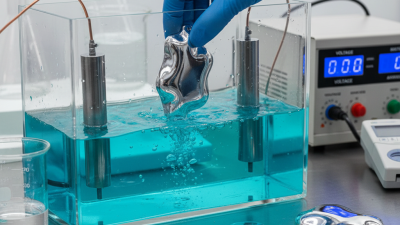
The process of cobalt plating involves several steps. First, the substrate is cleaned meticulously to ensure adhesion. Then, it is submerged in a cobalt sulfate solution where electricity facilitates the metal deposition. This method allows for precision in thickness and uniformity. The final product often possesses a shiny, attractive finish, making it not only functional but also visually appealing.
Despite its benefits, cobalt plating can have drawbacks. It can be more expensive than other types of plating, such as nickel plating. Additionally, the process requires careful handling to avoid contamination. The environmental impact of cobalt extraction also raises concerns. It's vital to weigh the pros and cons when considering cobalt plating for a specific application.
The Process of Cobalt Plating: Methods and Techniques
Cobalt plating is a vital process in the manufacturing sector, providing enhanced wear resistance and corrosion protection for various components. The techniques used in cobalt plating can vary significantly, impacting the final quality of the coated parts. Common methods include electroplating and electroless plating. Each technique has its own set of parameters that must be finely tuned to achieve optimal results.
Electroplating involves immersing the desired component in a cobalt electrolyte solution. An electric current then facilitates the deposition of cobalt onto the surface. This technique is versatile, allowing for control over layer thickness and uniformity. Electroless plating, on the other hand, relies on a chemical reaction to deposit cobalt without an applied current. This can be advantageous for complex geometries and provides a uniform coating.
Tips: Always maintain a clean substrate surface before plating. Contaminants can lead to adhesion issues. Regular analysis of the plating bath composition is crucial for consistent results. Also, consider environmental factors such as temperature and humidity, as they can influence the plating process. Minor adjustments can lead to significant improvements in plating quality.
Cobalt Plating Process Overview
Applications of Cobalt Plating in Various Industries
Cobalt plating has gained traction across various industries due to its unique properties. In aerospace, cobalt plating provides superior wear resistance and high-temperature stability. These features enhance the lifespan of critical components, ensuring reliability during flight operations. With growing demands for lightweight materials, cobalt's ability to maintain performance is crucial for engineers.
In the automotive sector, cobalt plating is employed to protect parts from corrosion. The durability it offers is vital, especially for components exposed to harsh environmental conditions. While cobalt plating enhances performance, it also raises questions about sustainability. The environmental impact of cobalt mining and the energy-intensive plating process require careful consideration.
Medical devices also benefit from cobalt plating. Its biocompatibility and resistance to bacteria make it ideal for implants and surgical instruments. However, manufacturers face challenges in balancing safety and performance. Continuous research is essential to improve processes and address potential risks associated with cobalt use. The evolving landscape prompts industries to reassess their reliance on cobalt while seeking innovative solutions.
Benefits of Cobalt Plating: Durability and Corrosion Resistance
Cobalt plating is a process that applies a layer of cobalt onto a surface, enhancing its properties. This technique significantly improves durability and corrosion resistance. Industries utilize cobalt plating in various applications, from aerospace to medical devices. The primary advantage lies in its ability to withstand harsh environments.
The durability of cobalt plating is remarkable. It provides a tough, wear-resistant surface that enhances the lifespan of components. This is especially important for automotive parts or machinery subjected to extreme conditions. The corrosion resistance is equally impressive. Cobalt resists oxidation, which prevents rust and degradation in moist or chemically aggressive environments.
Tip: When considering cobalt plating, ensure surface preparation is thorough. Proper cleaning enhances adhesion, leading to better performance. Also, evaluate the thickness of the coating; too thin a layer may not yield the desired protection.
Another consideration is the potential for brittleness. While cobalt plating is strong, improper application can lead to unexpected failures. Regular inspection and maintenance are essential to avoid issues. Keep an eye on the wear rate to predict when a re-coating might be necessary.
Challenges and Considerations in Cobalt Plating Processes
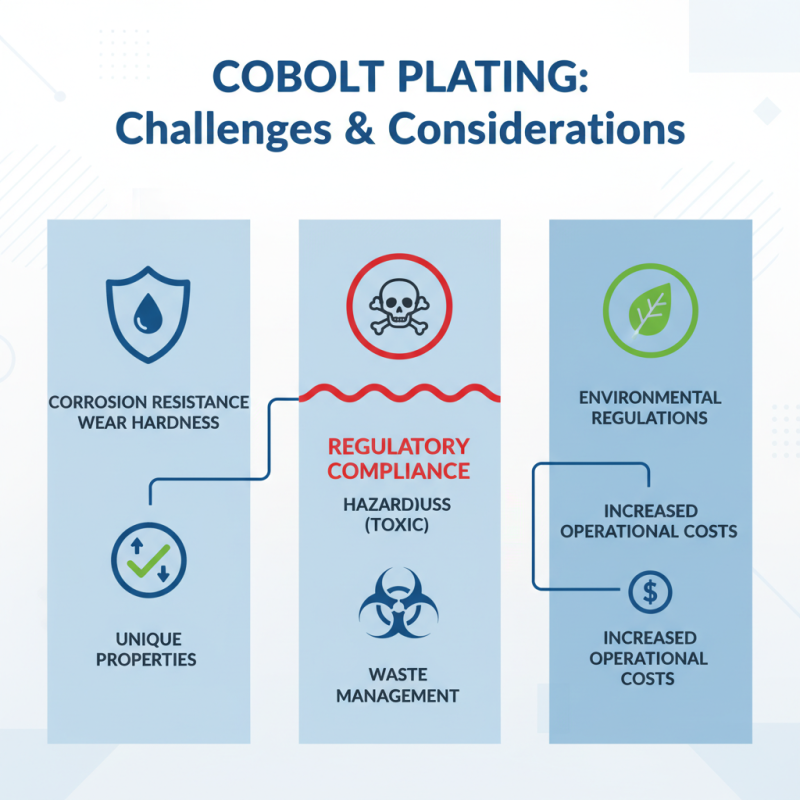
Cobalt plating is often favored for its unique properties, particularly its corrosion resistance and wear hardness. However, the cobalt plating process is not without its challenges. Regulatory compliance is a significant hurdle, as cobalt is classified as a hazardous material due to its toxicity. This makes waste management crucial. Plating facilities must adhere to stringent environmental regulations, which can increase operational costs.
Additionally, the plating process is sensitive to environmental conditions. Variations in temperature and humidity can influence coating quality. Maintaining ideal conditions is challenging yet vital for achieving uniform plating. Moreover, the need for precise control during the process can lead to variability in plating thickness. Studies suggest that nearly 25% of cobalt plating jobs face quality issues due to inconsistent process control.
Furthermore, the cost of cobalt is fluctuating. In recent years, prices have seen an increase of over 30%, impacting the overall cost-effectiveness of cobalt plating. Some manufacturers are exploring alternatives to reduce dependence on cobalt. However, these alternatives may not provide the same level of performance, creating a dilemma for industries reliant on cobalt. Finding the right balance will require ongoing research and development.