How to Choose the Right 1 Pole Circuit Breaker for Your Home?
Choosing the right 1 Pole Circuit Breaker for your home can feel overwhelming. Numerous options exist, each with its own specifications. This choice directly impacts your home's safety and electrical efficiency.
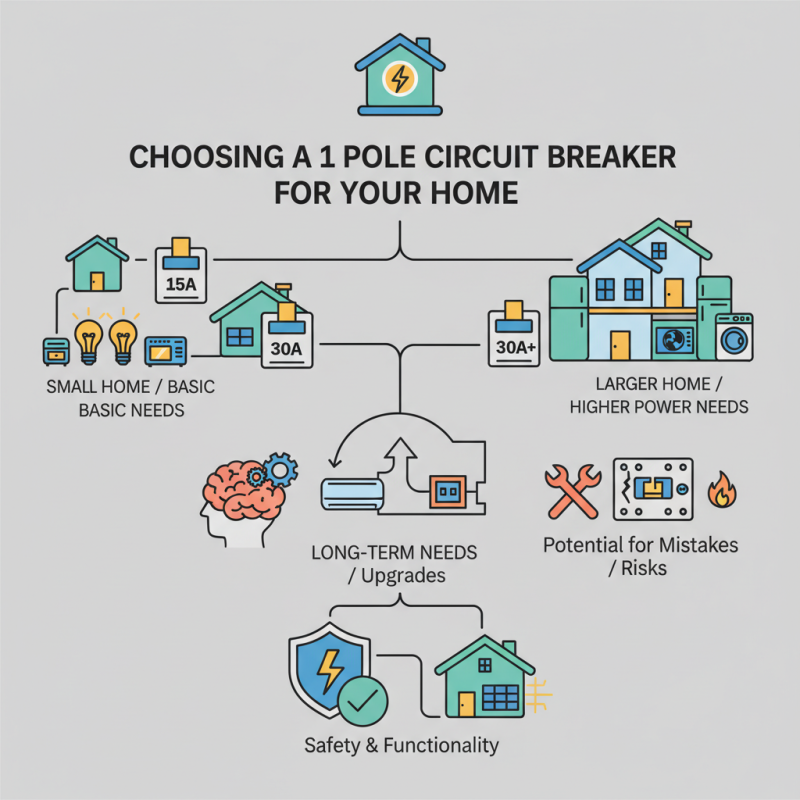
1 Pole Circuit Breakers protect against overloads and short circuits. However, not all homes require the same amperage or features. For example, a small home may only need a 15-amp breaker, while larger homes require more power. Consider how your home is used daily. Think about the appliances and devices you rely on.
It's crucial to reflect on your long-term needs. Upgrading might become necessary if you expand your home or add new electrical devices. Be aware of the potential for mistakes in selecting the wrong breaker. It’s easy to overlook details, yet even small decisions can lead to significant problems. Choose wisely to ensure your home remains safe and functional.
Understanding the Basics of 1 Pole Circuit Breakers
When evaluating a 1 pole circuit breaker, it's essential to grasp its fundamentals. These devices serve as critical safety components in electrical systems. They protect your circuits by interrupting the flow of electricity during overloads or short circuits. A straightforward design makes them an ideal choice for homes where space is limited.
Understanding the amperage rating is vital. This rating indicates how much current the breaker can handle without tripping. However, many homeowners overlook this detail, leading to potential overloads. It’s crucial to match the amperage with the wiring and appliances in your space.
Choosing the right breaker can be challenging. Not everyone knows their home's specific power needs. Improper choices can lead to frequent tripping or, worse, electrical fires. It’s worth spending time on research. Consulting with an electrician might prove helpful. Being proactive in this way can promote safety and efficiency in your home.
Factors to Consider When Choosing a 1 Pole Circuit Breaker
Choosing the right 1 pole circuit breaker involves understanding several key factors. Load capacity is crucial. You need to match the breaker’s amperage to your home’s electrical demands. According to reports, most households require breakers rated between 15 and 20 amps for standard circuits.
Installation location matters too. For example, kitchen circuits often need more robust breakers due to high appliance usage. Environmental factors like humidity can affect circuit breaker performance. If you live in a damp area, look for breakers designed for such conditions. Interestingly, a survey showed that 25% of homeowners overlook this aspect.
Safety ratings and certifications are essential as well. Look for breakers that comply with industry standards. Failure to do so may lead to hazards. Research indicates that improper breaker selection is a contributing factor in 30% of electrical fires. Ensure you prioritize safety during your selection process to avoid potential pitfalls in the future.
How to Choose the Right 1 Pole Circuit Breaker for Your Home?
| Factors | Description |
| Current Rating | Choose a breaker with a current rating suitable for your electrical load, typically between 15A to 20A for general circuits. |
| Voltage Rating | Ensure the breaker matches the voltage of your electrical system, commonly 120V in residential applications. |
| Application Type | Consider if the circuit breaker is for lighting, outlets, or heavy appliances, as specific applications may require different types. |
| Trip Type | Select between standard thermal-magnetic, ground fault, or arc fault protection depending on safety needs. |
| Size and Compatibility | Verify that the breaker fits your panel and is compatible with the existing system. |
| Price Point | Compare prices while considering the quality and features, balancing cost with reliability. |
Evaluating Your Home's Electrical Needs and Load Requirements
Evaluating your home's electrical needs is essential. Every home has unique load requirements based on appliances, lighting, and devices. Start by listing all electric equipment. Consider how often you use each item. This can help identify your power demands.
Tips: Check the wattage of major appliances. This helps in estimating total power requirements. Don't forget about additional outlets for future needs.
When choosing a circuit breaker, think about safety and efficiency. A home office might need more circuits. A small kitchen may not. What works for one space might fail in another. Always assess the load carefully.
Tips: Install a breaker that can handle peak loads. It should also leave room for expansion. This ensures safety during unforeseen surges. Keep in mind that underestimating needs can lead to frustrating outages.
Comparing Different Brands and Models of 1 Pole Circuit Breakers
Choosing the right 1 pole circuit breaker for your home can be challenging. With various brands and models available, it’s essential to understand their differences. Each brand typically offers unique features. Some may focus on durability, while others emphasize instant trip times. Estimating your household’s electrical needs is also pivotal. This ensures you select a breaker that can handle maximum load safely.
When comparing models, consider the amperage ratings. They determine how much current each breaker can handle. If the rating is too low, it may trip frequently. Conversely, a breaker with a high rating could be unsafe for lower usage. Look into trip technology too. Some breakers trip faster than others during overloads, providing better protection for sensitive devices.
**Tips:** Always check for certifications on the products. This can reflect their reliability. Additionally, read user reviews. Experience shared by others is invaluable. Sometimes, even well-known models might have issues. A model might work well initially but fail after a short time. Understanding these nuances is vital for making an informed decision.
Comparison of Features in 1 Pole Circuit Breakers
Installation and Safety Tips for 1 Pole Circuit Breakers
When it comes to installing a 1 pole circuit breaker, safety is key. Always turn off the main power before beginning the installation. It’s a simple tip, but crucial in preventing accidents. Use insulated tools to avoid any electric shocks. Don’t skip this step, as many do. Ensure the circuit breaker is compatible with your electrical panel. Mismatched components can lead to serious issues.
Once installed, test the breaker. Flip it on and off a few times. You want to ensure it functions properly. Observe for any unusual sounds or sparks. If you see anything odd, consult a professional. Not every DIY project turns out perfectly. It’s okay to seek help.
Keep your circuit breaker accessible for future checks. Avoid covering it with shelves or heavy furniture. Regular checks can help you catch issues early. If your circuit trips frequently, it might signal an overloaded system. Pay attention to these signs. Your safety depends on it.