China Best Automated Warehouse Systems at 2026 Canton Fair Insights?
As the 2026 Canton Fair approaches, the spotlight will shine brightly on the latest advancements in the Automated Warehouse System sector. Renowned expert Dr. Jake Lin, a leading figure in warehouse technologies, once stated, "The future of logistics lies in automation and smart systems." His insight reflects the transformative potential of these innovations.
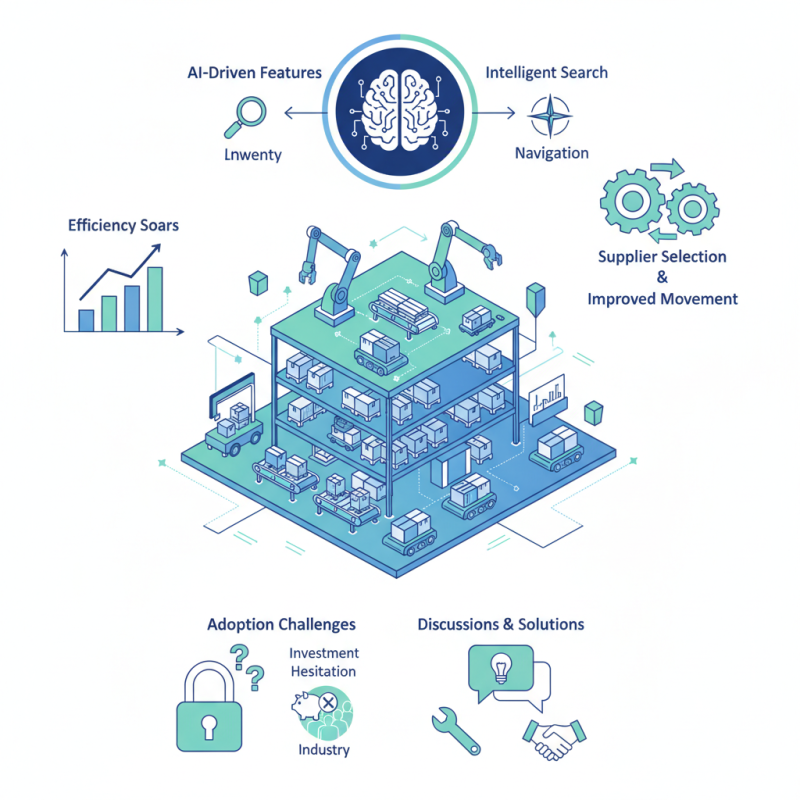
This year, the fair will showcase an impressive array of automated systems designed to streamline operations. With the integration of AI-driven features, such as intelligent search and navigation, efficiency is set to soar. Attendees will witness how these systems enhance supplier selection and improve movement through the expansive exhibition venue.
Despite the promising advancements, challenges remain. Adoption rates vary widely among industries. Some businesses still hesitate to invest in these systems. Thus, continual reflection on the barriers to implementation is vital. Engaging discussions at the fair will aim to address these concerns and explore practical solutions.
China's Leading Automated Warehouse Technologies at the 2026 Canton Fair
The 2026 Canton Fair will showcase China's leading automated warehouse technologies. This event highlights innovations that are transforming the logistics landscape. Automated systems can increase efficiency by up to 300%. They reduce labor costs significantly while enhancing accuracy in inventory management. Data from recent industry reports suggest that companies adopting these technologies report up to a 50% reduction in operating expenses.
Tips: When considering automation, evaluate your specific needs. Not every solution fits all. Assess the scalability of technology. As demand grows, your system should adapt without a hitch.
As more companies focus on automation, some challenges remain. Integration with existing systems can be a hurdle. Training staff to operate advanced technologies is essential but often overlooked. Reports indicate that 30% of businesses face issues during implementation. Reflecting on past failures can provide valuable insights for future improvements.
Automated warehouse systems are redefining efficiency, but success requires careful planning and execution. Embracing these technologies involves understanding their limitations as well.
China Best Automated Warehouse Systems at 2026 Canton Fair Insights
| Technology Type | Key Features | Efficiency Rate | Deployment Time | Cost Estimate (USD) |
| Automated Storage and Retrieval System (ASRS) | High density storage, minimal human intervention | 85% | 3-6 months | $150,000 - $500,000 |
| Automated Guided Vehicles (AGVs) | Flexible transport, real-time tracking | 75% | 2-4 months | $100,000 - $300,000 |
| Robotic Picking Systems | Precision picking, reduced errors | 90% | 4-7 months | $200,000 - $600,000 |
| Warehouse Management System (WMS) | Inventory tracking, data analytics | 80% | 1-3 months | $50,000 - $150,000 |
| Conveyor Systems | Continuous movement, scalability | 70% | 2-3 months | $80,000 - $250,000 |
Key Features of Automated Warehouse Systems Showcased at the Canton Fair
The 2026 Canton Fair is set to showcase innovative automated warehouse systems. Key features of these systems focus on efficiency and accuracy. Many of the showcased systems utilize advanced robotics for storage and retrieval tasks. These robots can operate around the clock, significantly reducing labor costs.
Another highlight is the integration of AI for inventory management. AI algorithms can predict stock levels and optimize storage solutions. This leads to better space utilization, which is essential for modern warehouses. However, some attendees expressed concerns about the implementation challenges of AI. Training staff to manage these high-tech systems poses additional hurdles.
Sustainability is also a critical feature in many offerings. Warehouses now incorporate energy-efficient technologies. Solar panels and energy-saving motors reduce the carbon footprint. Despite these advancements, some systems still rely heavily on traditional power sources. This raises questions about their overall sustainability goals. As the industry evolves, it’s vital to reflect on these areas for improvement.
Market Trends in Automated Warehousing Technology in China by 2026
The automated warehousing technology landscape in China is evolving rapidly as we approach 2026. A significant trend is the increasing integration of artificial intelligence. AI-driven systems are enhancing inventory management and order fulfillment efficiency. More companies are adopting these technologies to meet the growing demand for fast and reliable logistics solutions. However, this shift raises some questions about the readiness of businesses to adapt.
Another noteworthy development is the rise of modular warehouse designs. These allow for flexibility and scalability, which are crucial for businesses facing fluctuating demands. Yet, the initial investment can be daunting for smaller players. As warehouses become more automated, the skilled labor requirement changes. Training the workforce is now a pressing issue. Many companies may struggle with upskilling employees, which is a critical aspect of this transition.
Sustainability is also becoming a focal point. Companies are increasingly looking for eco-friendly automation solutions. This trend aligns with global efforts to reduce carbon footprints. However, the balance between technological advancement and environmental responsibility remains challenging. As automated systems continue to develop, businesses must reflect on their long-term impact. The road ahead in automated warehousing is dynamic, yet complex.
Impact of AI and Robotics on Warehouse Efficiency at the Canton Fair
The impact of AI and robotics on warehouse efficiency is profound. At the 2026 Canton Fair, many innovations were showcased. These advancements enhance speed, accuracy, and overall productivity in warehouse operations. Automation reduces human error in inventory management, which is often a significant challenge. However, reliance on technology can lead to vulnerabilities, especially if systems fail.
Incorporating AI allows for smarter logistics. Robots can sort, package, and deliver items without human intervention. This can lead to increased throughput. Yet, it's essential for companies to balance automation with human oversight. An over-reliance on machines might create a disconnect in workflow monitoring.
**Tips:** Regularly review system performance. Understand where automation excels and where humans are still needed. Invest in training for warehouse staff on new technologies. This ensures a team complements the machines effectively. Automation should aid, not replace, human touch in critical processes.
Future Projections for China's Automated Warehousing Sector Through 2026
As China approaches the 2026 Canton Fair, the automated warehousing sector is on the verge of significant transformation. Emerging technologies are reshaping how goods are stored and retrieved. Smart robotics and AI-driven systems are becoming standard. These innovations promise improved efficiency and reduced labor costs.
However, there are hurdles to overcome. Integration of these sophisticated systems can be complex. Many companies may struggle with the initial investment. Training staff to use new technologies presents another challenge. While the benefits seem substantial, not all warehouses are equipped to handle these changes seamlessly.
Growth projections indicate a surge in automated warehouses. Companies must adapt quickly to stay competitive. The market will likely see both success stories and pitfalls. Realigning strategies to incorporate automation is essential. As the landscape evolves, continuous evaluation and adjustment will be key for long-term success.